Bounce House Rentals Spokane WA: What to Know Before You Book
I have set up inflatables on lawns, church parking lots, school fields, and one very sloped backyard in the South Hill neighborhood that nearly ended a birthday party before it started. After enough of these jobs, you learn that renting a bounce house in Spokane has less to do with picking the cutest design and more to do with space, weather, power, and timing. Here is what I tell every family or organizer who asks me where to start.
Measure Your Space Before You Look at a Single Photo
The most common mistake I see is choosing a unit by theme and then discovering it does not fit. A standard 13 by 13 foot bounce house needs a flat area of about 17 by 17 feet once you add clearance for the blower and a safe margin around the walls. Larger combo units with a slide can run 15 by 25 feet or more, and they need around 20 by 30 feet of usable ground.
Walk the yard with a tape measure. Check for overhead branches, power lines, and low eaves. You want at least 8 to 10 feet of vertical clearance for most units, and more for taller slides. Many Spokane yards have mature pines, and falling needles and sap are a nuisance, but a low limb is a real hazard.
Slope matters just as much. A grade of more than about 5 percent causes the unit to lean and puts uneven pressure on the stakes. If your yard tilts, look at the driveway, a park shelter area, or a neighbor's flatter lot instead.
Understand What You Are Actually Renting
A good rental covers delivery, setup, anchoring, the blower, a power cord, and pickup. Ask whether the price is for a full day or a set block of hours. In my experience, all-day rentals are better value than short windows, because kids drift in and out and parties run long. A four-hour rental often turns into a rushed two hours of play after setup and the first round of cake.
Also ask who does the setup. Professional setup means someone checks the ground, places a tarp underneath, drives stakes at every anchor point, and tests inflation before you sign off. If a company drops the unit at your curb and expects you to wrestle 200 pounds of vinyl into place, you are carrying the liability and the labor.
Pick the Right Type for the Crowd
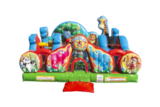
A basic bounce house suits kids from about 3 to 10 and handles four to eight children at once, depending on size. A combo with a slide adds variety but cuts jumping space. Obstacle courses work best for school-age kids and older groups, since they reward competition and running. Water slides are a different category entirely and draw the biggest crowds in July and August.
Match the unit to the age range, not the guest count alone. I have watched a toddler get bowled over because a unit was shared by five-year-olds and ten-year-olds at the same time. If your guest list is mixed, rent a smaller unit for little ones or set rotating age groups every 15 minutes.
Plan Around Spokane Weather
Inland Northwest weather is not predictable. A June afternoon can start at 70 degrees and finish with a gusty thunderstorm. Inflatables and wind do not mix. Most operators set the cutoff at around 15 to 20 miles per hour sustained wind, and any responsible company will tell you to deflate the unit if gusts approach that level.
Rain is a separate problem. Light drizzle is usually manageable for a water slide, but a bounce house gets slippery and heavy when wet, and electrical safety becomes a concern. Ask what the weather policy is before you book, specifically whether you can reschedule without a penalty. I would not rent from anyone who treats a storm day as a no-refund event.
Heat is the other extreme. In August, vinyl on a dry unit can get uncomfortably hot by mid-afternoon. Shaded yards or early morning slots make a real difference, and a water slide solves the problem outright.
Check Power and Water Access
Every blower needs a standard 110-volt outlet, and most draw between 8 and 12 amps. If you plug a blower into a circuit shared with a refrigerator or space heater, you will trip the breaker halfway through the party. Ask the operator how long a cord they bring. Most carry 50 to 100 feet, but if the outlet is far from the setup location, mention it ahead of time.
For water slides, you need a garden hose connection within reach and decent pressure. Test it before the rental day. A weak spigot means a trickle instead of a splash, and a slide that is only half wet gets sticky and slow. Also think about where the water will drain. A soaked patch of lawn turns into mud, and a slope can send runoff toward a neighbor's property or your foundation.
Book Early and Confirm Details
Saturdays from May through September fill up quickly. I recommend booking four to six weeks ahead for peak dates, and even earlier for holiday weekends or school-year-end events. Weekdays and Sundays are often easier to secure and sometimes cheaper.
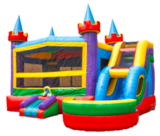
When you are comparing providers, a search for a jumper rental near me will show you local operators, but look past the first listing. Check that the company delivers across your part of the county, offers all-day rental periods, handles setup itself, and lets you book online with a clear confirmation. Delivery fees vary with distance, so a provider based on the north side may charge extra to reach Cheney or Liberty Lake.
Get the price in writing, including delivery, tax, and any fee for extra stakes or sandbags if you are setting up on pavement. A quote that looks 20 dollars cheaper can easily end up 40 dollars higher once those items appear.
Know the Safety Rules and Enforce Them
A rental is only as safe as the supervision around it. Assign one adult to watch the unit at all times, and have that person remain there until pickup. Set a clear rule for shoes off, no food or gum, no flips, and no rough play. Keep jumpers sorted by size so older kids do not collide with smaller ones.
Check the capacity label on the unit and follow it. Operators often give a limit by weight or headcount, and the limit exists because overloading strains seams and reduces the cushion. If the blower stops for any reason, everyone gets off immediately. The unit deflates slowly, but panic and a crowd can still cause injuries.
Ask about insurance as well. Reputable operators carry liability coverage, and some venues, such as city parks or schools, require a certificate of insurance before you can set anything up. Getting that paperwork late is a classic way to lose your reservation.
Prepare the Site the Day Before
A little prep saves a lot of stress. Mow the lawn a day or two earlier, walk the area for sticks, rocks, sprinkler heads, and pet waste, and mark the sprinkler zones so the system does not turn on at 6 a.m. If you are using a park, confirm that inflatables are allowed and whether you need a permit.
On the day itself, make sure the gate is open, the pathway is clear, and someone is home to meet the crew. Provide a few feet of clearance for the delivery vehicle. I also recommend setting up a shoe station, a water table, and a shaded area for parents before the unit arrives, so the party flows once the blower starts.
Final Thoughts From the Field
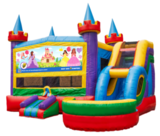
Renting a bounce house in Spokane is simple when you plan for the boring parts: ground, power, weather, and paperwork. Measure first, book early, ask direct questions about setup and weather policies, and pick a unit that suits the actual ages in your group. Do those things and the rental becomes the easy part of the day, which is exactly how it should feel.
Comments
Post a Comment